Español

Average Cost of a Garage Door
How much do new garage door cost? The average price of a garage door across the country is generally around $1,500, but this number is significantly affected by various factors, leading to potential fluctuations.
It’s important to note that the cost of a garage door isn’t limited to just the door itself; it also includes installation fees, the addition of an automatic opener, a possible keypad, and extra remote controls, among other additional costs. Furthermore, the price of the garage door itself can vary based on its type, materials used, and size.
For example, some high-end homes may opt for more durable, aesthetically pleasing, and better soundproofing wood or aluminum garage doors, which are often priced much higher than standard steel garage doors.
Garage Door Cost Factors
When discussing the factors that affect new garage door pricing, these factors not only include basic installation fees, material selection, and procurement, but are also heavily influenced by geographic location, market demand, and technological advancements. Below, we will break down each of these common cost factors.
Cost Based on Type
The prices of different types of garage doors vary based on design, materials, and features. Below is a brief overview of common garage door types and their characteristics:
- Carriage (Side-hinged) Garage Doors: This is a traditional design, originally made of wood, but now available in various materials. Prices may vary depending on the material (such as solid wood, composite wood, or metal) and the level of customization.
- French Garage Doors: Based on the French countryside style, these usually have glass panels. Prices are influenced by the type of glass (such as clear, frosted, or tinted glass), the frame material, and decorative details.
- Glass Garage Doors: Featuring an aluminum or steel frame with glass panels, these have a modern design. Pricing depends on the type of glass, frame quality, and the complexity of the design.
- Roll-up Doors: Made of horizontal steel slats that roll up above the door opening, these are ideal for spaces with high ceilings. Prices vary based on the thickness of the steel slats, coating quality, and the operating system (manual or electric).
- Standard Panel (Sectional) Garage Doors: These doors move up in sections and are one of the most popular types. Prices depend on the panel material (such as steel, aluminum, or composites), thickness, color options, and additional features like insulation or soundproofing.
- Tilt-up Garage Doors: These solid panels lift from the ground and slide into the top of the garage. Prices vary based on the panel material, lift mechanism, and installation requirements.
- Sliding Garage Doors: Installed on the inside or outside of the garage walls, these doors move horizontally. Prices are affected by the material (such as wood, metal, or composite), track system, and whether or not they are automated.


Note: the price overview above is for general guidance only and does not constitute a specific quote. Actual prices depend on specific product specifications, brand, market availability, and installation service fees.
Cost Based on Material
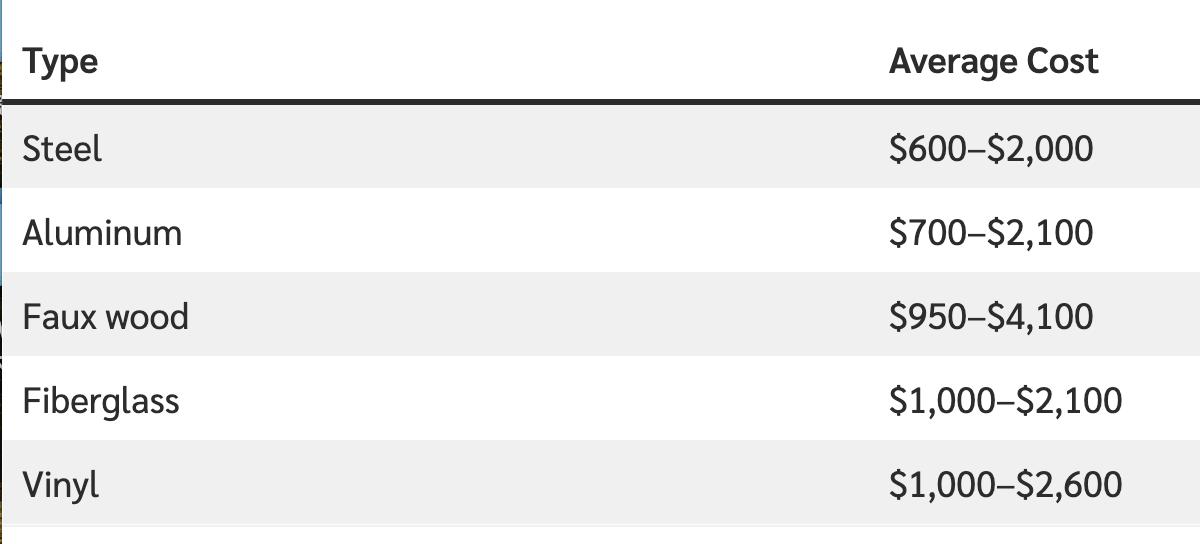
The most common garage door materials include aluminum, fiberglass, steel, and wood. When it comes to cost, steel and aluminum are more budget-friendly options. These materials are easy to maintain and can handle different weather conditions.
On the other hand, faux wood garage doors are the most expensive. While they offer the look of real wood, they don’t require as much weather-related upkeep.
As for the relationship between garage door size and cost, keep in mind that the price will vary based on factors like the size, material, design, and additional features. It’s best to consider your needs and budget when making a choice.
Cost Based on Size
In the market, you can choose single, double, or even triple garage doors based on your specific needs and budget.
1. Single Garage Door: A Budget-Friendly Choice
Single garage doors are the most basic option and are popular with many families because they are affordable. Compared to double or triple garage doors, single doors require fewer materials, which lowers manufacturing costs and, in turn, reduces the price, making them a top choice for families on a budget.
Additionally, the compact design of single garage doors makes them ideal for homes with limited space, such as apartments or small houses. They also come in a wide range of styles, from modern and simple to classic and vintage, meeting the aesthetic needs of different families.
2. Double Garage Door: A Flexible Solution
For families with two or more cars, a double garage door is definitely a more practical choice. There are two main designs for double garage doors: a single large door or two separate doors. The single large door allows easy access for both cars with one opening, saving space and giving the garage a clean, unified look.
On the other hand, two separate doors offer more flexibility, letting you open just one door when needed, making it convenient and quick. It's also worth noting that opting for a double door design can save costs, as it’s often more efficient in terms of materials and installation compared to buying two single garage doors separately.
3. Three-Car Garage Door: The Perfect Blend of Luxury and Practicality
For families who seek the highest quality of life, a three-car garage door is the perfect combination of luxury and functionality. It offers a variety of design options, including a mix of single and double doors or three separate doors. The combination of single and double doors keeps the look clean and elegant while offering the convenience of easy access. This allows the homeowner to choose how to open the doors based on their needs.
On the other hand, having three separate doors highlights the spaciousness and luxury of the garage. Each door provides a sense of individual space and privacy, letting the homeowner enjoy both convenience and the warmth and comfort of home.
When choosing a three-car garage door, it’s important to consider not only its appearance and functionality but also its durability and safety. As an essential part of a home’s security system, the quality and performance of the garage door directly impacts the safety of your family and belongings.
Therefore, it’s recommended to select a well-known brand and high-quality materials to ensure the door’s long-term stability and security.
Additional Cost Factors
1. Labor Costs: The Value of Professional Installation
Hiring a professional installer is key to ensuring the quality of your garage door installation. According to market research, the cost for this service typically ranges from $200 to $500 per door, depending on factors like installation difficulty, local market rates, and the garage door size and reputation of the installation company. It’s important to note that these costs do not include the electrical installation needed for automatic door openers, as installing an automatic system is more complex and requires additional electrical knowledge and skills.
2. Manual vs. Automatic: Balancing Convenience and Cost
There is a noticeable cost difference between manual and automatic garage doors. Manual garage doors are known for being budget-friendly, with installation costs ranging from about $600 to $2,150, making them a good option for families or small businesses with limited budgets. On the other hand, automatic doors are widely favored for their convenience and safety. Installing an automatic garage door adds an extra $200 to $1,300 to the cost, but this investment significantly enhances ease of use, especially during bad weather or when carrying heavy items.
3. Electrical Work: The Key to Automatic Door Systems
For automatic garage doors, electrical work is an essential part of the installation. Hiring an electrician to power the automatic door system typically costs about $75 per hour. This cost can vary based on location, the electrician's skill level, and market demand. The quality of the electrical work directly affects the stability and safety of the automatic door system, so it's crucial to choose a qualified electrician for the installation.
4. Insulation: A Double Consideration for Energy Saving and Comfort
The insulation of garage doors is important for energy savings and indoor comfort. Statistics show that insulated garage doors can significantly reduce heat loss in winter and heat gain in summer, leading to lower energy consumption and savings on electricity bills. While the initial investment for insulated garage doors is higher (around $50 to $500), their long-term energy-saving benefits and financial returns are substantial. Additionally, consumers can choose to buy pre-insulated door styles, which may cost about $200 to $600 more than non-insulated doors, but this option eliminates the hassle and costs of adding insulation later.
5. Additional Accessories: Enhancing the User Experience
To further improve the experience and safety of using garage doors, consumers can choose to install various accessories such as lights, openers, keypads, and safety sensors. While these accessories can add several hundred dollars to the final price, they significantly enhance the convenience and security of the garage. For example, safety sensors can automatically stop or reverse the movement of the garage door if they detect an obstacle, helping to prevent accidents.
6. Window Design: Balancing Aesthetics and Ventilation
Garage doors with windows not only increase light and ventilation in the garage but also enhance the overall appearance. However, this design does come with a higher cost. Market research shows that garage doors with windows are about 70% more expensive than those without. Despite the added cost, many consumers are still willing to pay for this design because it provides a more comfortable and enjoyable experience.
7. Location Factors: The Impact of Regional Differences
Lastly, it's important to consider how location affects the cost of garage door installation. In cities where the cost of living is high, demand for garage installations is strong, and material costs are more expensive, the installation costs for garage doors tend to rise. This is mainly due to the intense market competition and higher labor costs in these areas. As a result, homeowners in these regions may need to spend several hundred dollars or more on buying and installing a garage door.
In summary, the total cost of garage door installation is influenced by several factors, including labor costs, the choice between manual and automatic doors, electrical work costs, insulation performance, additional accessories, window design, and location factors. When making a purchasing and installation decision, consumers need to consider all these factors to choose the garage door product that best fits their needs and budget.
How to Choose a Garage Door
You can choose from a variety of garage door types. The most common type is the sectional door, which consists of panels connected by hinges and rolls open and closed on tracks, providing stability and durability. There are also telescoping garage doors that can extend or retract to fit different widths of garage openings; up-and-over garage doors that tilt up along a track, saving space and making it easy for vehicles to enter and exit; side-hinged garage doors that open outward and are suitable for tight spaces; and roll-up garage doors that roll up like a curtain, allowing for quick opening and closing while looking stylish.
When selecting a garage door, you should also carefully consider the material. If you live in a colder climate, you may want to choose a door with good insulation. The quality of insulation is rated using an R-value system, where a typical non-insulated garage door has an R-value of 0, while insulated doors range from 5 to 10 or higher. A higher R-value means better insulation, which effectively prevents heat transfer, lowers overall energy consumption, and saves on electricity bills.
Additionally, you need to be clear about the style, quality, and type of automatic garage door opener you need. There are many models and brands of automatic openers on the market, each with different drive methods (such as chain drive, belt drive, or hydraulic drive), safety features (like obstruction reversal and manual release), and extra functions (like remote control or smartphone app control). Therefore, when choosing, you should carefully compare the performance and price of different products based on your needs and budget to find the best automatic opener for you.
In summary, selecting the right garage door and automatic opener requires considering factors like type, material, and performance, while also taking your actual needs and budget into account.
When choosing a garage door, besides considering the number of parking spaces and the type of door, there are other important factors to keep in mind.
First, safety is a crucial aspect. Most modern garage doors come equipped with advanced safety systems, such as infrared sensors and automatic stop features to prevent accidental collisions. These safety features play a vital role in protecting your vehicle and family.
Second, durability is another key factor when selecting a garage door. High-quality garage doors are usually made from strong materials like galvanized steel or aluminum alloy, which are corrosion-resistant and can withstand harsh weather conditions and frequent use. Additionally, some premium garage doors have anti-theft designs and reinforced locks, further enhancing their security.
Garage doors can also be part of your home’s exterior design. Modern garage doors come in various designs, from simple flat doors to ornate carved ones. You can choose styles and colors that complement your home’s appearance, creating an overall harmonious look.
For convenience, some garage doors are equipped with remote operation and smart control systems. With just a press of a button on the remote or a smartphone app, you can easily open or close the garage door without getting out of your vehicle or manually operating it. This smart design not only increases convenience but also adds comfort and enjoyment to your daily life.
Finally, when you decide to purchase a garage door, be sure to choose a reputable manufacturer or supplier. They not only offer high-quality products but also provide professional installation and after-sales service to ensure your garage door remains in top condition during use.
In conclusion, selecting a suitable garage door requires considering multiple factors, including the number of parking spaces, door type, safety, durability, design, and ease of use. By carefully comparing and choosing, you can find a garage door that meets your needs and offers great value.
Conclusion
In summary, buying a new sectional garage door is a worthwhile investment, and there are various price options available, so you're sure to find one that fits your budget. If you want to repair an old garage door, it’s also affordable, typically costing between $100 and $600. However, before deciding whether to install a new door or repair the old one, I recommend getting quotes from three different companies. This way, you can compare prices and find the best deal.